
Multinational organizations including PepsiCo and industry associations like IPA, have come in favour of India's intellectual property regime, which is being reviewed by the US administration.

The BSE Mid-Cap index was currently up 0.83%. The BSE Small-Cap index was currently up 0.8%.

Expressing disappointment over the hike in repo rate by the RBI, India Inc on Friday said a rate cut by the bank would have helped ameliorate sentiments as businesses are "reeling" under a tight liquidity crunch due to high cost of capital.

The rupee fell sharply by 32 paise at 66.37 against the US dollar in early trade on Tuesday.

Never before has the need for creating an ambience for economic policy reforms been as critical as it is now, points out A K Bhattacharya.

No stock on BSE Sensex ended in red while only 3 stocks in the broader Nifty50 index settled the day negative
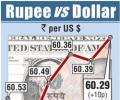
Forex dealers said besides increased selling of the American currency by exporters and banks, a higher opening in the domestic equity market and the dollar's weakness against other currencies overseas supported the rupee.

Protectionist and exclusionary FTAs weaken multilateralism.

Last November, a lawyer for Future Retail Limited (FRL) told Delhi high court that Amazon is interfering with its lawful business and thousands may lose their jobs and FRL may go bankrupt. Senior advocate Harish Salve, who appeared for FRL, likened Amazon to East India Company. Senior advocate Gopal Subramanium, who represented Amazon, told the Future counsel to keep the "East India Company" rhetoric aside, as Amazon has invested $6.5 billion all over India and created 900,000 jobs. This drama played out in the case in which Amazon has challenged Future's $3.4-billion deal with Reliance, alleging the retailer's deal breached an agreement with the American e-commerce firm.

India's current account deficit is expected to deteriorate in the current fiscal on account of costlier imports and tepid merchandise exports, according to the Finance Ministry's monthly economic review. The review released on Thursday by the ministry also said that global headwinds would continue to pose a downside risk to growth as crude oil and edibles, which have driven inflation in India, remain major imported components in the consumption basket. For the present, it said, "their global prices have softened, as fears of recession have dampened prices somewhat. This would weaken inflationary pressures in India and rein in inflation."

Falling for the fourth day in succession, the rupee today dipped by 23 paise to close at nearly three-week low of 59.38 against the dollar amidst the RBI announcing an SLR cut that is expected to release nearly Rs 40,000 crore into markets.
Bankers have been criticised for not passing the benefits of rate cuts

Says impact of crisis in China won't be as big here as in some other countries

'A rag-tag coalition is more insecure and hence, more inclined to reform,' argues Devangshu Datta.

Why did the company zero in on RBL Bank to understand the business of banking? While the M&M investors heaved a sigh of relief, one gentleman must have been all smiles after this, RBL Bank MD and CEO R Subramaniakumar, notes Tamal Bandyopadhyay.
Tata Motors (down 1.7%) was the top loser on Sensex and Nifty, while Lupin (1.6%) gained the most.

Shares of rate sensitive sectors such as realty, infrastructure, banking and automobiles ended higher ahead of the Reserve Bank of India (RBI) mid-quarter policy review on June 17.

On Tuesday, Pompeo and Esper will hold the 2+2 talks with External Affairs Minister S Jaishankar and Defence Minister Rajnath Singh, covering the entire expanse of defence and security ties as well as key regional and global issues.

The leaders of the Quad comprising India, the United States, Australia and Japan are set to demonstrate that the grouping is a 'force for global good' and has a unifying commitment to a rules-based international order amid China's increasingly intimidatory behaviour.

India's IPR framework and enforcement were comparable to those in developed countries

Dream rally: Investors' wealth doubled in 5 years in India's equity market on Friday.

While the RBI can nudge things along, ultimately bank owners must recapitalise and review internal processes to ensure that a culture of irresponsible lending doesn't continue, says Devangshu Datta.

The USS John Paul Jones acted like a dog marking the lamp post, observes Ambassador M K Bhadrakumar.

Markets shrugged off RBI's neutral stance on key policy rates.

Spiralling prices pinched the pocket of consumer as edible oil, fuel and many other commodities turned dearer this year amid pandemic-induced disruptions but the inflationary pressure is anticipated to ease, though marginally, in the coming months. As consumers, at retail as well as wholesale levels, are willy-nilly learning to live with the new normal of curbs to contain the spread of coronavirus infections, experts are of the view that elevated inflation is likely to stay longer. After dealing with the devastating blows from the second COVID wave, especially during the April-June period, the economy is well on the revival path but the emergence of Omicron might unsettle the recovery trajectory in the short term.

A fall presents an opportunity to buy rate-sensitive stocks.

IMF, which has also lowered its global economic growth forecast for 2016 and 2017 by a marginal 0.1 per cent to 3.1 and 3.4 per cent respectively, recommended six 'reform priorities' for India
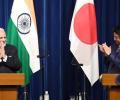
'Relations between India and Japan are robust and devoid of either shadow of history or any irritant.' 'In fact, there is plenty of warmth and goodwill earned over history. There are no negatives but only opportunities,' notes Dr Rajaram Panda.

RBI may hold rates steady as economic parametes are going strong, say experts.
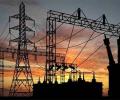
Bangladesh has sought revision of a 2017 power purchase agreement with Adani Power Ltd as the price for the coal-generated electricity appeared too expensive, officials said in Dhaka on Thursday. "We have communicated with the Indian company seeking revision of the agreement," an official of the state-run Bangladesh Power Development Board (BPDC) told PTI on the condition of anonymity and without elaborating on the matter. Media reports suggested that the "high coal price" to be purchased for the Adani plant at India's Jharkhand emerged as the key factor for the dispute.

While the tax treatment does legitimise past crypto transactions, there is a possibility that any, or all, private cryptocurrencies will be banned in future.

So far, almost every positive development in terms of the bilateral ties has been overtaken by innate hostility that is often driven by popular sentiments.

Senior officials say the government might come up with an incentive package for the SEZs following the release of Foreign Trade Policy.

Benchmark 10-year bond yields hit a 13-month peak as bond traders priced in more aggressive monetary easing next year.

The finance minister chided the central bank on Tuesday over its focus on fighting inflation, saying the Reserve Bank of India (RBI) also needed to abide by the government policy to promote economic growth.
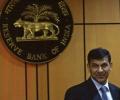
Policymakers have been grappling with high prices for food staples such as onions and potatoes even after the central bank raised interest rates by a quarter percentage point in each of its previous two reviews.

One of the beneficiaries is Jindal Steel and Power, which had earlier been kept out of procurement for rails

The S&P BSE Sensex plunged 301 points to close at 25,490 and the Nifty50 fell 86 points to end at 7,815.
RBI will now increasingly shift focus to domestic parameters

'The virus of trust deficit seems to be taking a toll of the friendship built over the years by succeeding leaderships of the two countries,' notes Rup Narayan Das.
